43% of Sole Trader NDIS Support Workers feel burned out* - Here's Why...
Read Time – 6mins
Sole Trader NDIS Support Workers Are Feeling Burned Out the Most
Findings from a NDIS Workforce Survey paint a confronting picture*: 43% of sole trader NDIS support workers who work for themselves, feel burned out at least half the time, and 12% feel burned out almost always.
On top of that, around 1 in 3 say they feel emotionally drained, physically exhausted, and frustrated in their jobs most of the time.
These numbers aren’t small. They’re telling us something important: NDIS sole traders and small providers are struggling — and many are on the edge of burnout.
Let’s break down what’s causing it.
Too Much Paperwork, Too Many Blocks
One of the strongest themes from the research? Red tape.
Nearly 1 in 2 workers say they’re overwhelmed by paperwork and blocked by administrative requirements.
For sole traders, this lands even harder. There’s no admin person or assistant. No payroll officer. No bookkeeper. It’s just… you.
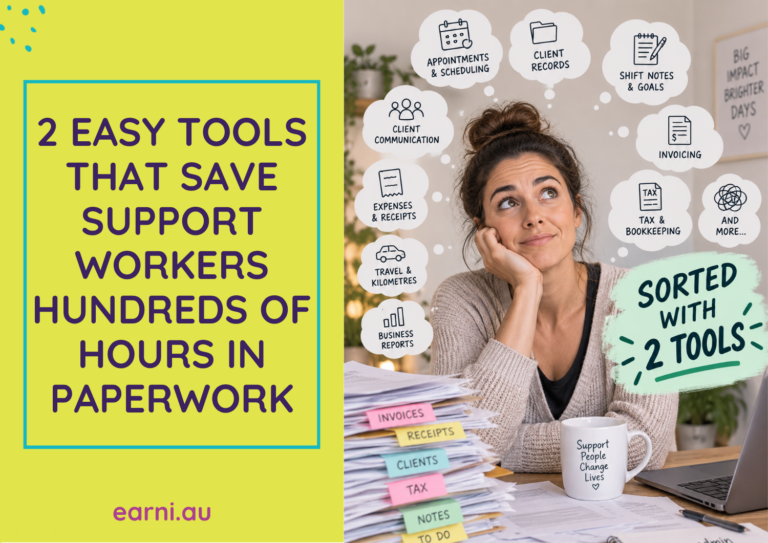
Service bookings, invoices, claims, emails, worker screening reminders, tax obligations, service agreements, NDIS requirements — it adds up quickly. And it’s eating into personal time, client time and recovery time (which everyone needs!). We recommend trying Earni for all admin work – it saves you time and stress, and gives you BACK your freedom.
Sole Traders NDIS Support workers Face the Toughest Situations
Survey findings showed that sole traders are the most likely to report confronting situations in their work.
They often work alone, without peers or team leaders to debrief with. When something difficult happens with a client, behaviour, or environment, the emotional load sits squarely on one set of shoulders.
Many Sole Traders Don’t Want More Clients — They Want Less Admin
Another interesting insight:
- 15% of sole traders want more hours or more clients
- But 60% actually want to work less
Most aren’t burned out from client work…
They’re burned out from everything wrapped around it.
Late-night invoicing. Receipts in the glovebox. Managing GST and tax. Scrambling to keep agreements updated. Chasing unpaid invoices. Re-sending claims.
They love the work — but the work behind the work is stretching them thin. They care deeply, but they’re tired.
Despite the pressure, 88% of workers say they provide a valuable contribution to their community.
They’re proud.
They care.
And they want to keep helping people.
But even with this strong sense of purpose, sole traders reported low levels of healthy work practices, meaning sleep, rest, routine, and boundaries are slipping. This is where burnout grows quietly, then suddenly shows up loudly.
The Research Is Clear: Sole Traders Need More Support
These findings highlight something essential:
Sole traders have unique needs — and they’re not getting the admin support required to stay healthy, organised, and sustainable in the long term.
No one becomes a support worker because they love invoicing or record-keeping.
No one starts their own NDIS business because they dream of chasing up payments or managing spreadsheets.
Yet that’s the reality for thousands of providers trying to run their business alone
This Is Exactly Why Earni Was Created
Earni was designed by NDIS Plan Manager Jude McColm after years of seeing support workers struggle behind the scenes.
There’s often no income to hire a PA, no budget for a bookkeeper, and no simple place to manage everything without drowning in emails, documents or using multiple programs.
Earni gives sole traders:
- an easy way to manage clients & service agreements
- quick, compliant NDIS invoicing linked to the price guide
- simple expense management & tax tracking – no more dread at tax time
- a clean view of your calendar and weekly schedule, with notifications
- fewer manual tasks and fewer mistakes
- time back in your day
Not to oversell it — but for many sole traders, Earni simply acts like the admin support they wish they had. Without the expense of hiring someone.
Because when NDIS support workers are supported behind the scenes, they’re able to keep doing the meaningful work our community relies on — without burning themselves out in the process.
*Findings from the NDIS workforce survey and focus groups 4.7.2023